Contact us
|
Whatsapp
Whatsapp:+86 13889850231
Whatsapp:+86 13889850231

Polyester Fiber, known as Terylene in China, is a synthetic fiber obtained by spinning polyester, which is condensed from organic dibasic acids and dihydric alcohols. Polyester fiber plays a significant role in apparel, home textiles, and industrial textiles.
Key Characteristics at a Glance
| Item | Description |
|---|---|
| Chemical Name | Polyethylene Terephthalate (PET) |
| English Name | Polyester Fibre |
| Chinese Trade Name | Terylene |
2.1 Raw Material Sources
The production process of polyester fiber consists of two parts: polyester melt synthesis and melt spinning. The raw materials for synthesizing polyester are primarily obtained from petroleum cracking, and can also be derived from coal and natural gas:
Petroleum is heated and cracked to produce toluene, xylene, ethylene, etc.
These are chemically processed to obtain Purified Terephthalic Acid (PTA) or Dimethyl Terephthalate (DMT), and Ethylene Glycol (EG).
The successful refining of PTA significantly reduced production costs.
2.2 Production Process
Polycondensation Reaction: PTA is directly esterified with EG. The resulting product is polycondensed under vacuum at 270-290°C to produce PET.
Melt Spinning: There are two methods: chip spinning and direct spinning.
Chip Spinning: The high polymer melt from polycondensation is cast into a ribbon, cut into chips, dried, and then melted for spinning.
Direct Spinning: The high polymer melt is fed directly into the spinning manifold, offering higher efficiency.
2.3 Virgin vs. Recycled Polyester Fiber
Polyester fiber comes from two sources:
Virgin Polyester: Produced directly from petrochemical raw materials.
Recycled Polyester (rPET): Produced from waste PET materials like plastic bottles through processes including sorting, sterilization, and melt-spinning. It offers environmental benefits and is currently adopted by many mid-to-high-end brands.
3.1 Classification by Form
| Type | Description | Main Application |
|---|---|---|
| Polyester Filament | Continuous strands, can be directly used for weaving | Apparel fabrics, home textiles |
| Polyester Staple Fiber | Cut to cotton-like length, can be spun alone or blended | Blending with cotton, wool, linen, etc. |
| Industrial Yarn | High-tenacity fiber | Tire cord, ropes, geotextiles |
3.2 Classification by Luster
Based on Titanium Dioxide (TiO₂) content, polyester fiber is classified as:
Bright: No TiO₂, brilliant luster.
Semi-dull: Contains a small amount of TiO₂, soft luster, most commonly used.
Full-dull: Contains more TiO₂, no luster.
3.3 Classification by Functionality
Cationic Dyeable (CDPET): Modified with sulfonate groups, can be dyed with cationic dyes.
Differential Shrinkage Yarn: Uses differences in heat shrinkage to create bulkiness.
Composite Fibers: e.g., T/N (polyester/nylon composite), S/I (sea-island type).
3.4 Typical Product Specification Examples
| Luster | Specification (Denier/Filament Count) | Cross-section |
|---|---|---|
| Semi-dull | 50/24, 50/36, 75/36, 75/72, 100/48, 150/48 | Round |
| Bright | 75/24, 75/36, 100/24 | Round |
| Black | 75/24, 75/48, 100/36, 150/36 | Round |
| Full-dull | 50/72, 75/36, 75/72 | Round |
4.1 Physical Properties
| Property | Typical Value |
|---|---|
| Specific Gravity | 1.38 g/cm³ |
| Melting Point | 255~260°C |
| Softening Point | Begins to stick at 205°C |
| Safe Ironing Temperature | 135°C |
| Moisture Regain | Only 0.4% |
| Filament Breaking Tenacity | 4.5~5.5 g/den |
| Staple Fiber Breaking Tenacity | 3.5~5.5 g/den |
| Filament Breaking Elongation | 15~25% |
| Staple Fiber Breaking Elongation | 25~40% |
| High-Tenacity Fiber Strength | 7~8 g/den, Elongation 7.5~12.5% |
4.2 Main Advantages
Excellent Wrinkle Resistance and Shape Retention: Its biggest advantage is good wrinkle resistance and shape retention. It has high strength and elastic recovery, making it durable, strong, wrinkle-resistant, and non-iron.
Good Chemical Resistance: Resistant to weak acids and weak bases, and has some resistance to dilute strong acids at room temperature.
Light and Abrasion Resistance: Good resistance to sunlight, abrasion, does not mildew, and is not moth-eaten.
Good Electrical Insulation: Possesses good electrical insulating properties.
Cost Advantage: The price of polyester filament is about half that of nylon filament and one-third that of cotton yarn.
4.3 Main Disadvantages
| Disadvantage | Description | Improvement Method |
|---|---|---|
| Poor Moisture Absorption | Moisture regain is only 0.4% | Copolymerize with hydrophilic groups |
| Poor Dyeability | Requires high temperature or carrier dyeing | Copolymerize with sulfonate groups |
| Easy Pilling | High fiber strength makes pills hard to shed | Reduce degree of polymerization |
| Prone to Static | Noticeable during winter | Add antistatic agents |
| Poor Breathability | Feels stuffy | Use profiled cross-sections, fine denier |
5.1 Apparel
Polyester can be woven alone or blended with natural fibers like cotton, wool, silk, linen, and other chemical fibers to produce a wide variety of fabrics that are durable, crisp, easy to wash, quick-drying, non-iron, and have good wash-and-wear performance. Widely used in:
Men's and women's shirts, outerwear, children's clothing
Down jackets, outdoor jacket fabrics
Sportswear, quick-dry clothing
5.2 Home Textiles
Interior decorative fabrics
Curtains, carpets
Wadding (filling material)
5.3 Industrial Textiles
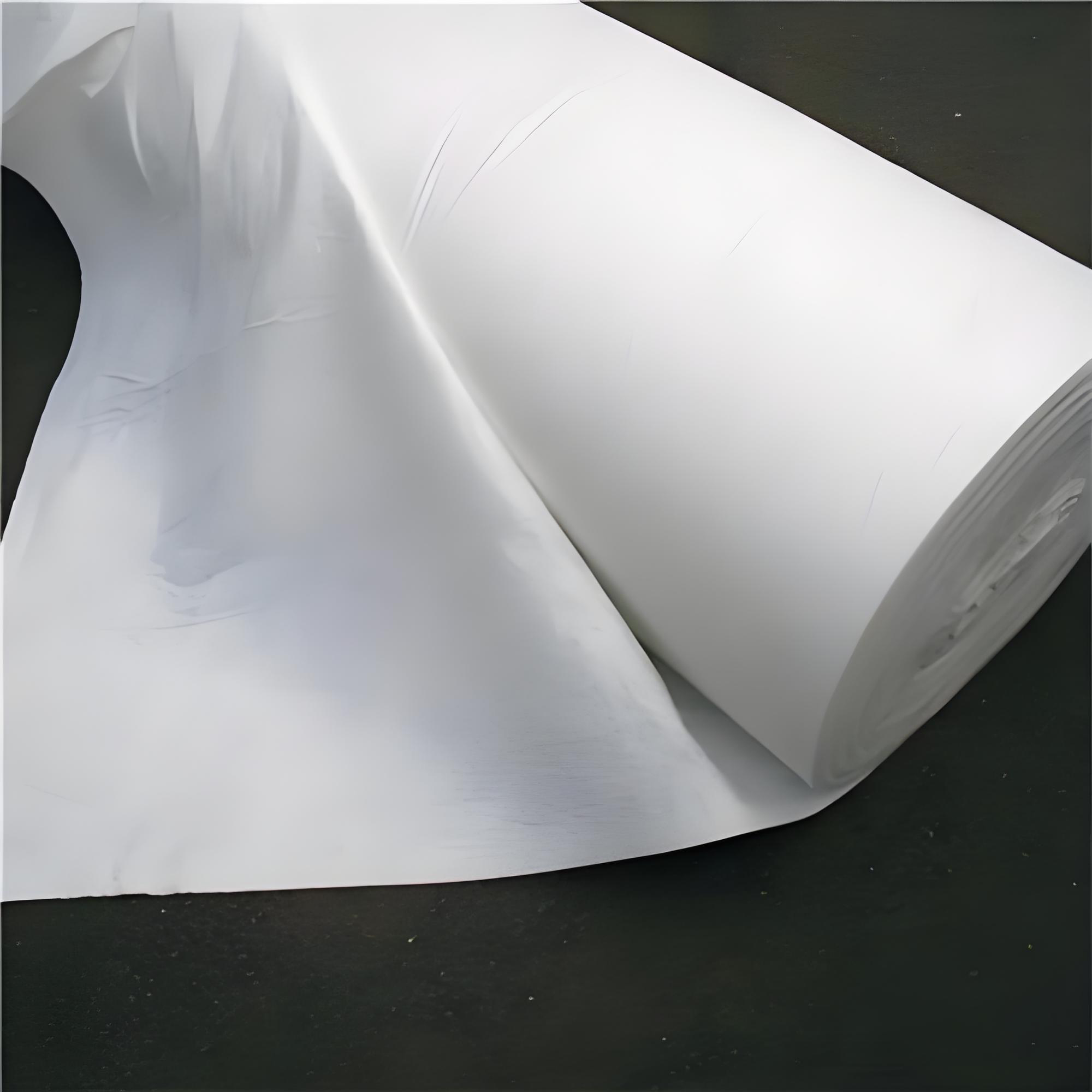
Geotextiles: Used in highway and railway construction
Tire Cord: High-tenacity fiber
Ropes, Fishing Nets
Filter Materials
Waterproofing Membranes
5.4 Specialized Applications
Polyester Hollow Fiber Membrane: Used for gas separation, e.g., separating helium from natural gas.
Polyester Microfiber Felt: Used for synthetic leather bases and various filter materials.
Asphalt Reinforcement Fiber: Improves the high-temperature stability, low-temperature crack resistance, and fatigue resistance of roads.
6.1 Fine Denier Trend
Researchers are developing finer fibers, such as 83 dtex/36 f profiled full-dull polyester drawn yarn, which can achieve a breaking tenacity of 3.71 cN/dtex and a breaking elongation of 29.8%. Fine denier fibers feel softer and can enhance the grade of the fabric.
6.2 Functional Modification
Achieved by adding functional masterbatches:
Flame retardancy
Antibacterial properties
UV protection
Antistatic properties
6.3 Circular Economy
The technology for recycling waste polyester bottle chips into fiber is maturing. By mixing bottle chips, crushed foam, and friction materials in appropriate proportions, qualified cotton-type polyester staple fiber can be produced, conserving resources and reducing white pollution.
6.4 Intelligent Manufacturing
Melt direct spinning and online additive technologies continuously improve production efficiency, reduce broken ends and filamentation, and enhance product quality stability.
Consultation Hotline:
+86 13889850231
Email:sales01@xzhch.com
Address:No.33, Nan'er Road, Heping District, Shenyang, Liaoning Province
Copyright © 2002-2025 非商用版本 Registration:Liaoning ICP record